News
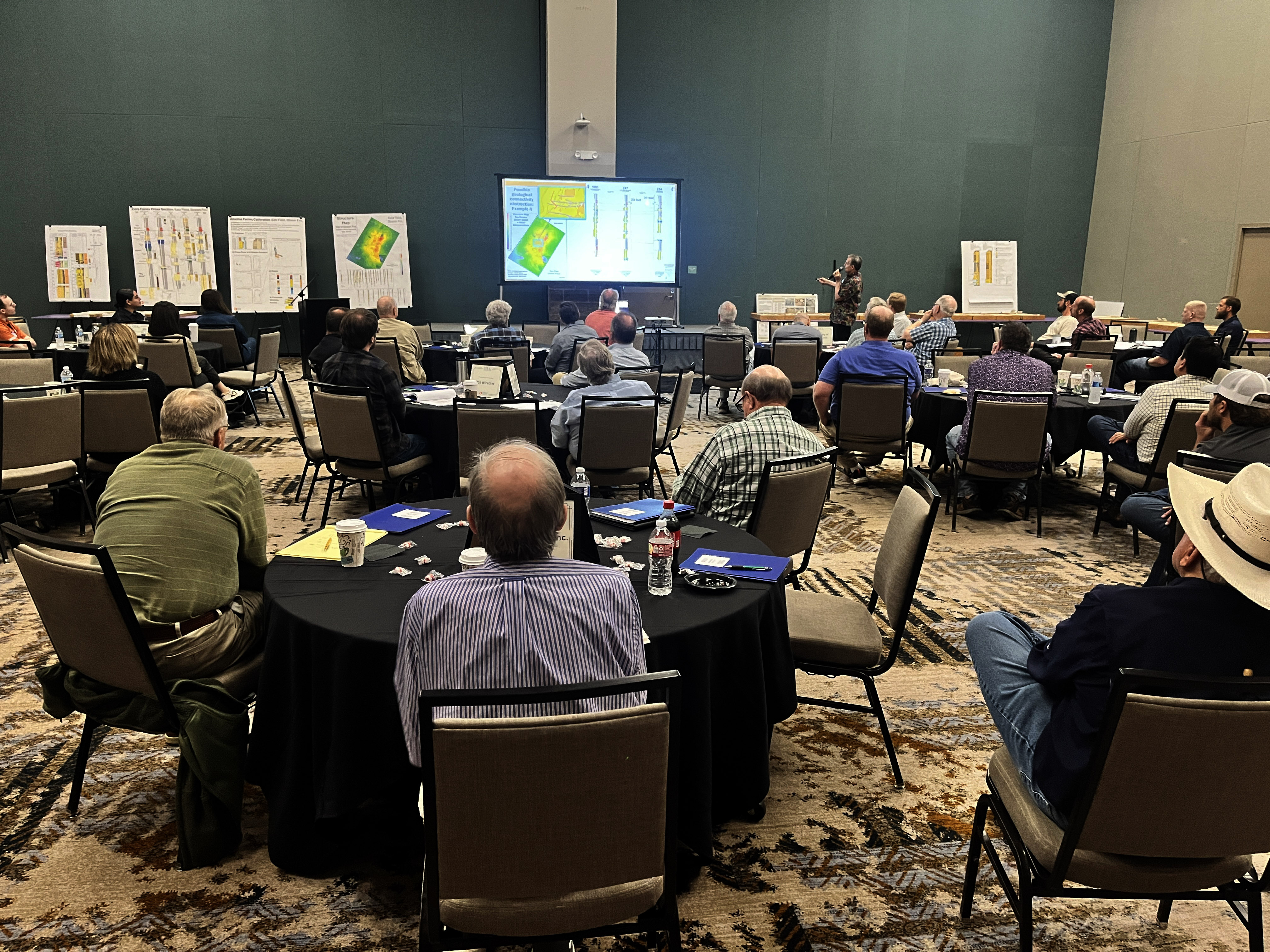
May 8th, 2026: STARR Hosts Workshop on Strawn Group at Wichita Falls Oil information Library
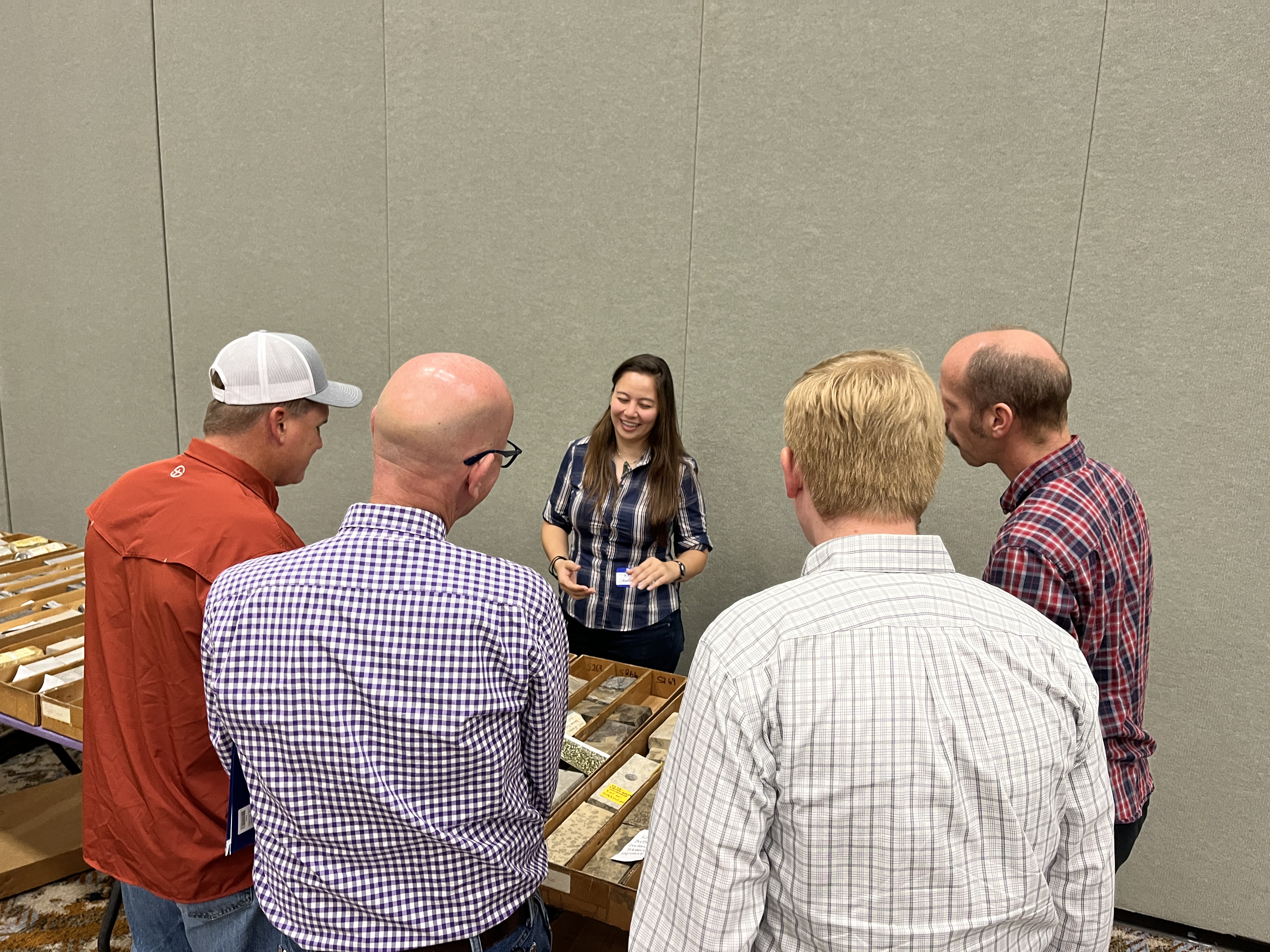
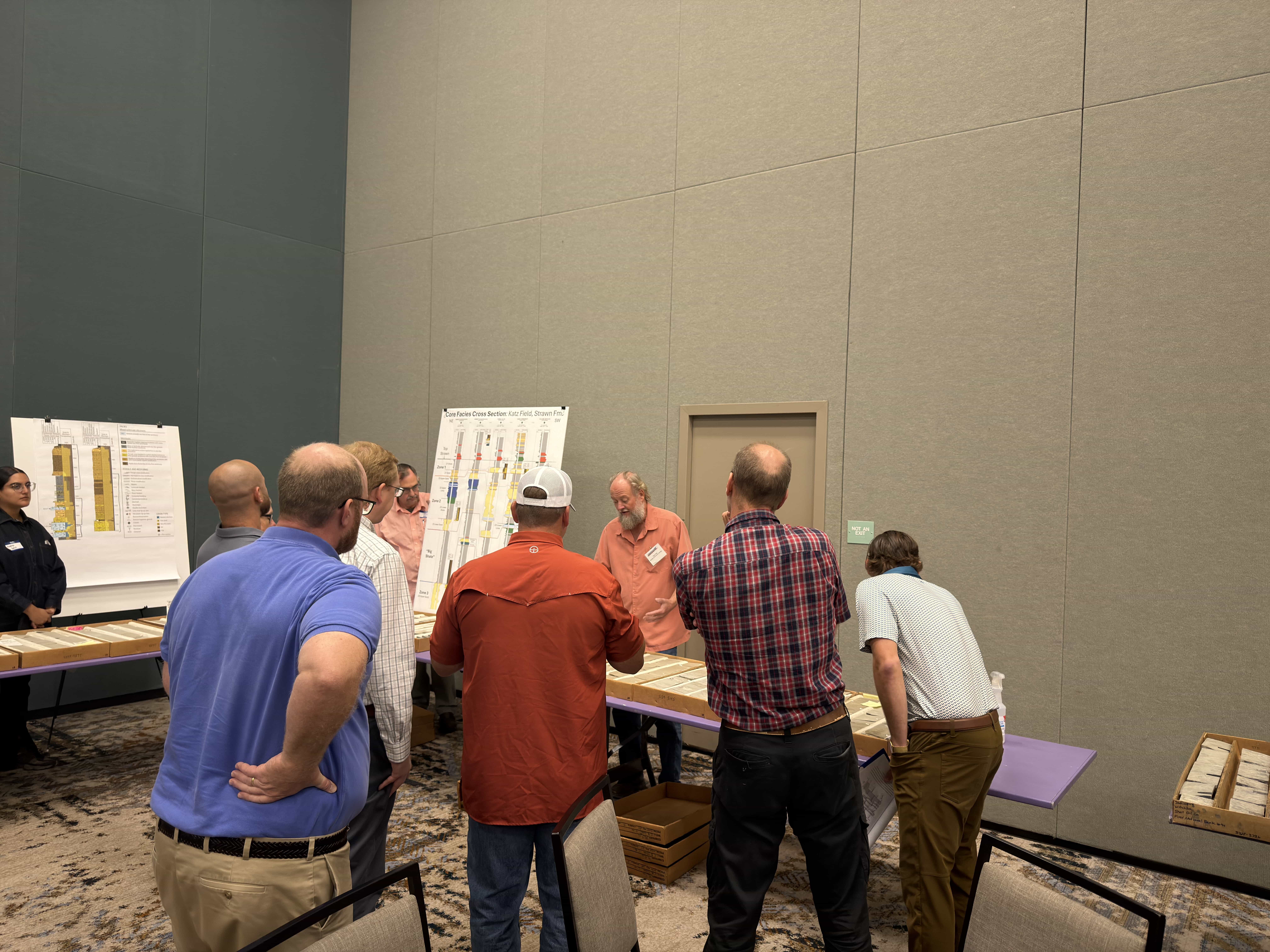
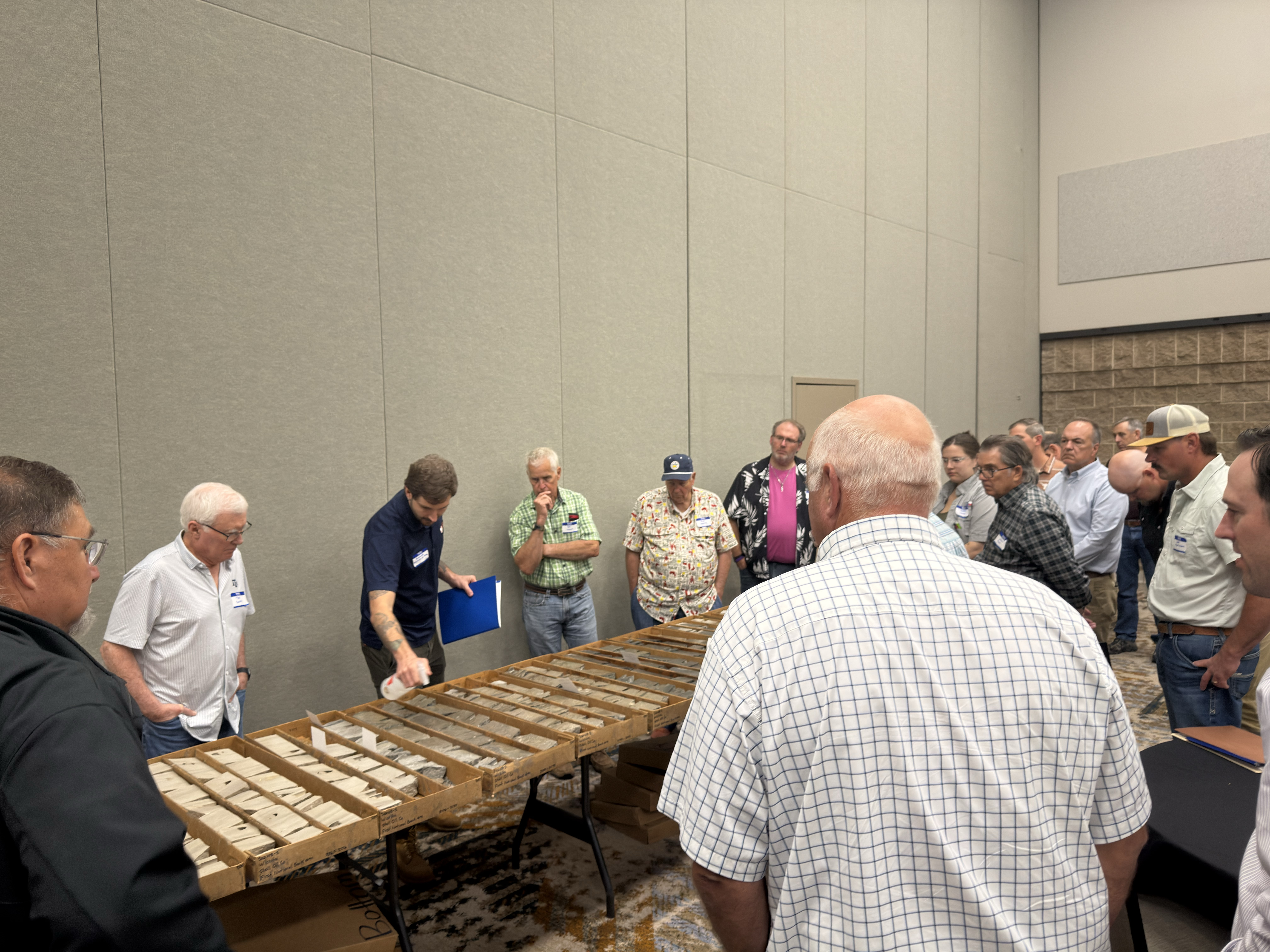
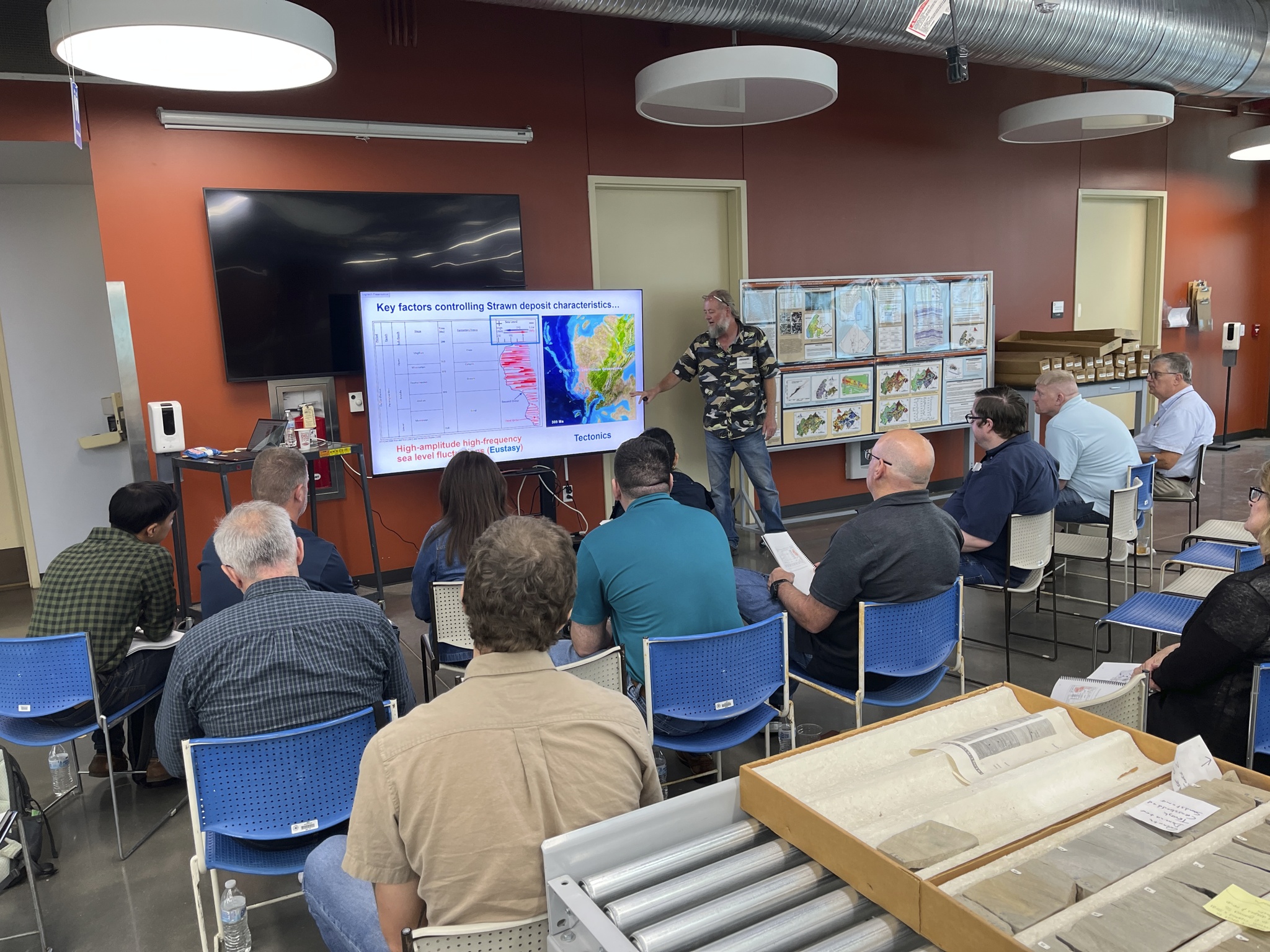
STARR hosted a workshop on the Strawn Group at the Wichita Falls Oil Information Library. The 65 attendees had the chance to examine 400+ feet of Strawn core, as well as presentations on various aspects of the STARR team’s multi-disciplinary studies of the Strawn petroleum system, including stratigraphy and facies variability, reservoir permeability and connectivity, and source rock typing, maturation, and migration.
May 6th, 2026: STARR Hosts Workshop on Shelf and Nearshore Marine Sands in Texas
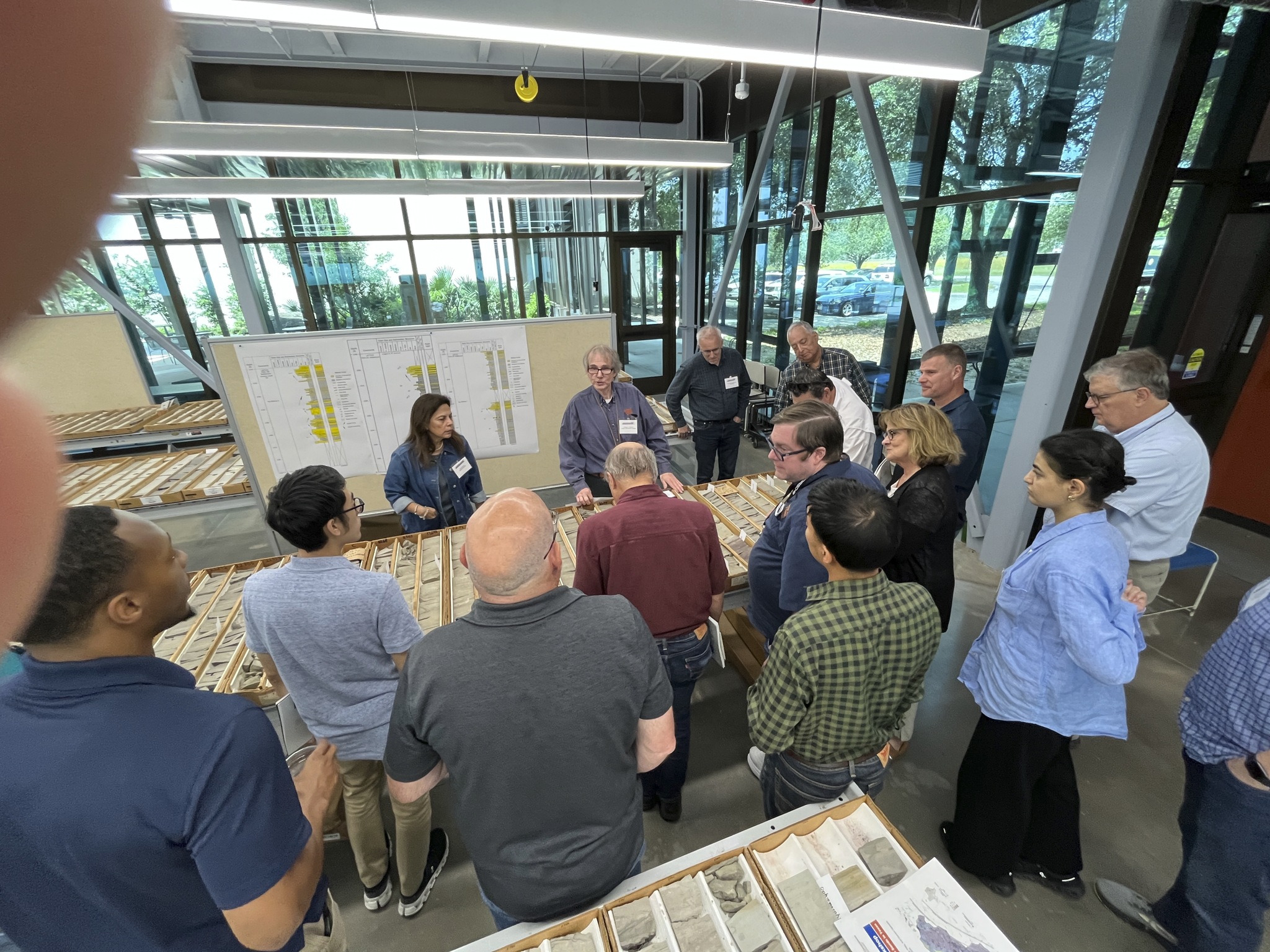
STARR presented the all-day core workshop "Shelf and Nearshore Marine Sands in Texas." The workshop was an in-depth study of shelf and nearshore-marine depositional environments. Attendees examined nearly 900 ft (275 m) of cores in Texas with a variety of depositional environments from shoreface, deltaic, and shelf settings. These included the Upper Cretaceous Taylor Group, Paleocene Midway Group, Eocene Wilcox Group in the Gulf Coast., the Pennsylvanian Strawn Group in the Permian Basin, the Upper Cretaceous San Miguel Formation in the Maverick Basin, and the Pennsylvanian Marmaton Group in the Anadarko Basin.
April 9th, 2026: Strawn Research Paper Published
STARR researchers Kelly Hattori and Peter Flaig, along with their colleague Gregory Wahlman published "Depostional model for the spatiotemporal evolution of a mixed carbonate-siliciclastic icehouse system: Pennsylvanian Strawn Group, Eastern Shelf, Permian Basin, USA" in Sedimentologika [link]
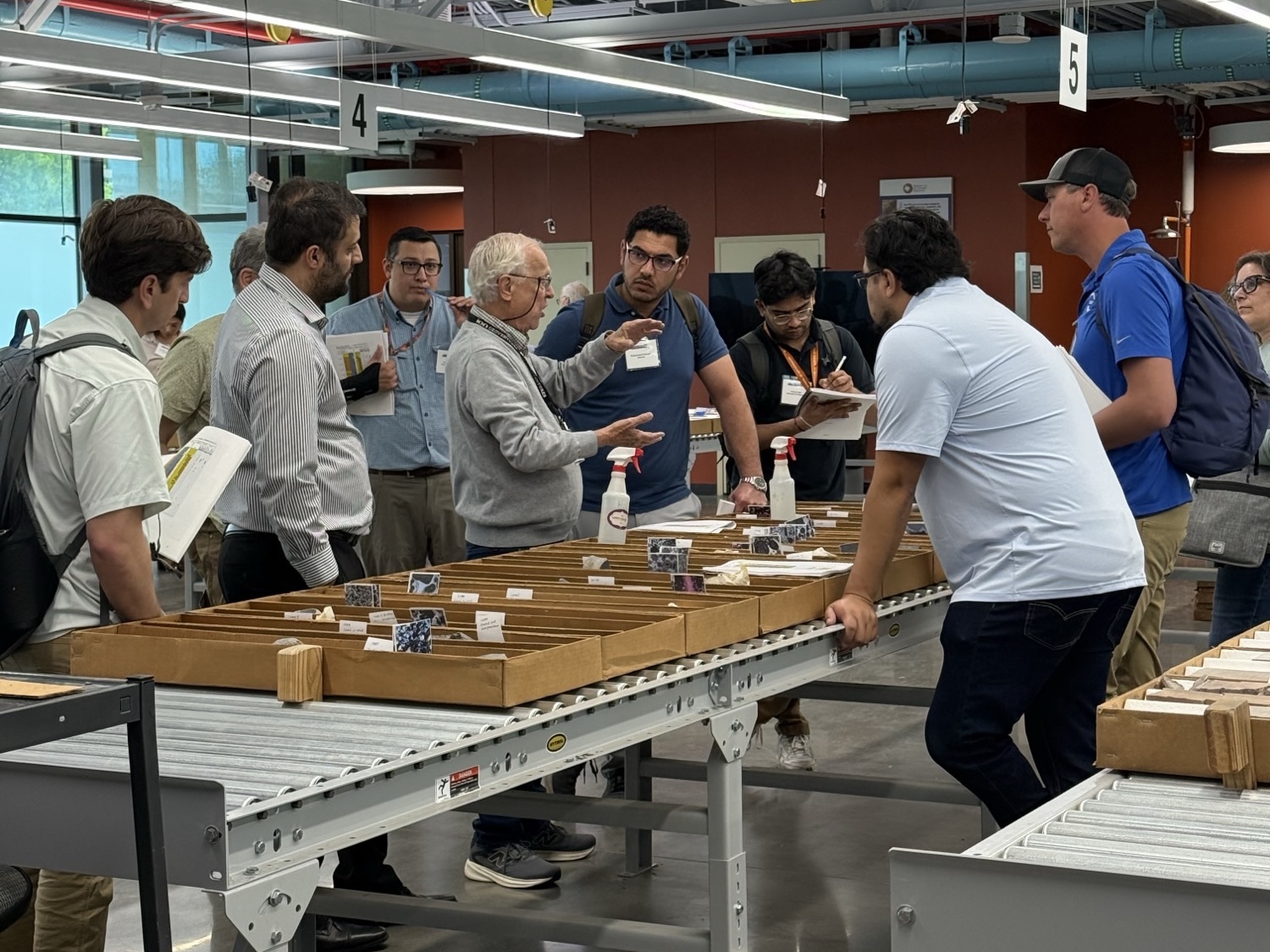
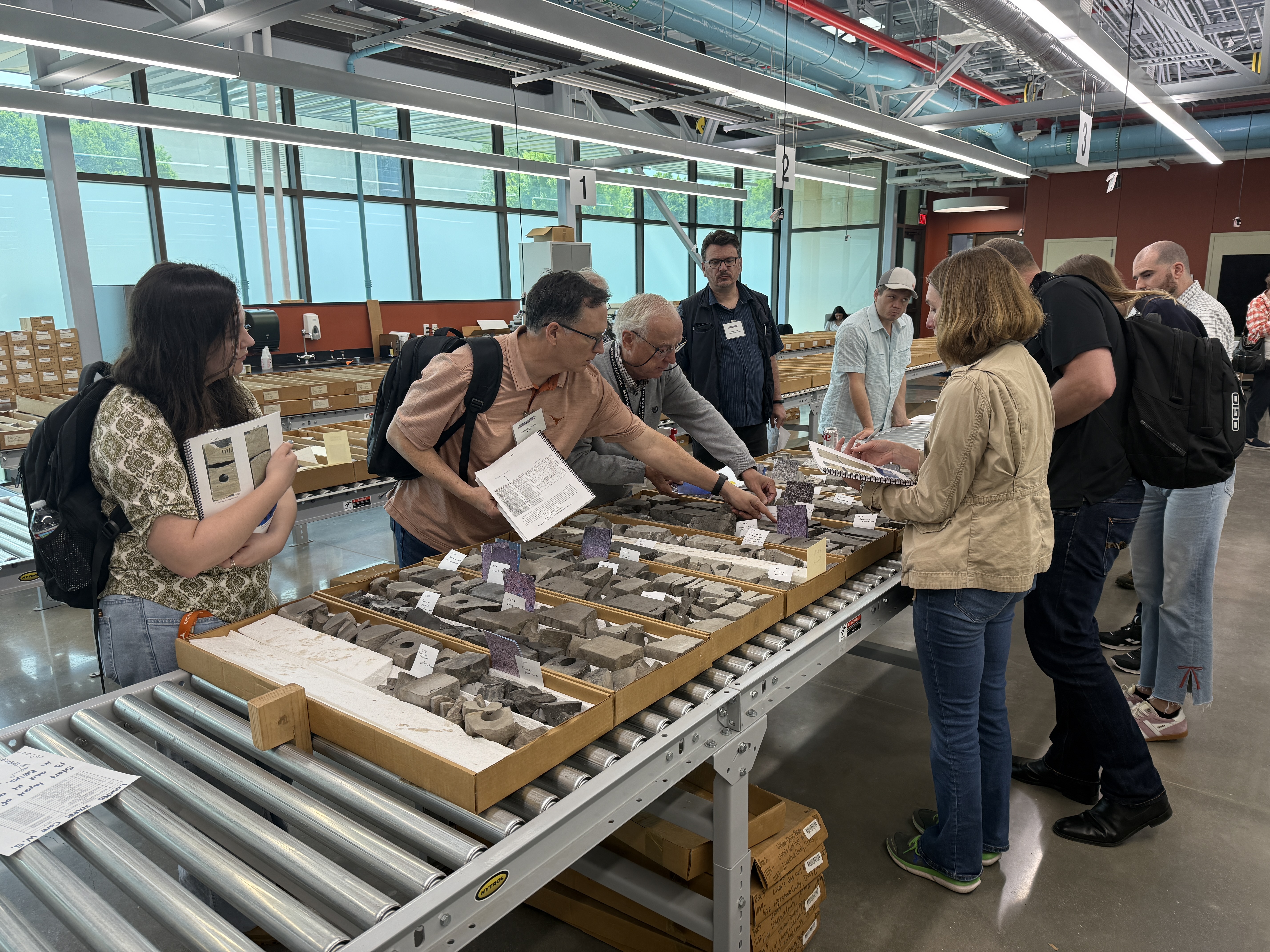
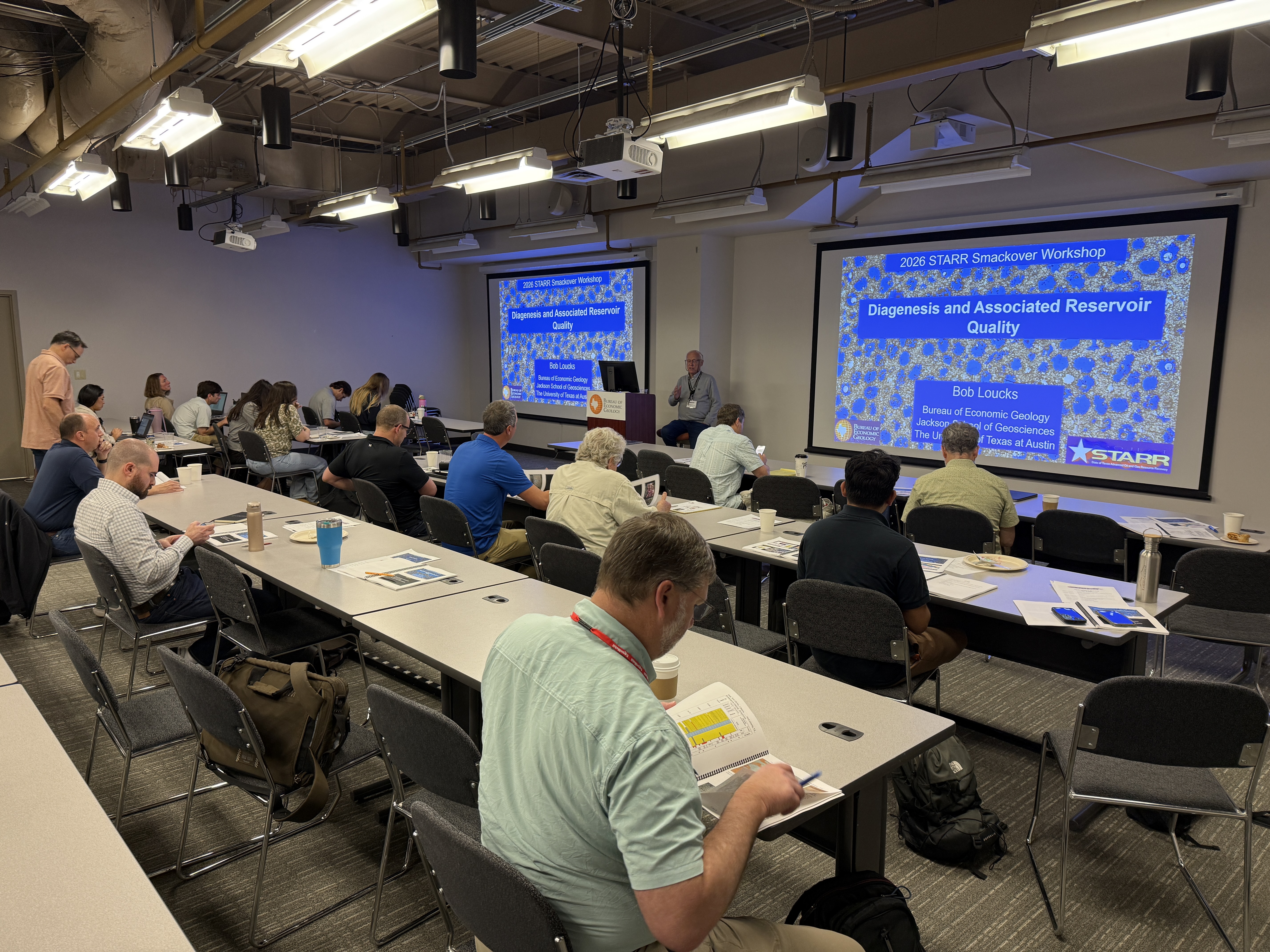
April 1st, 2026: STARR Hosts Workshop on Smackover Formation in Northeast Texas
STARR hosted a seminar and core workshop on the Smackover Formation of NE Texas at the Bureau of Economic Geology. The Smackover is an active and emerging target for lithium-rich brine exploration, production of which depends on the presence of high-quality reservoirs. The 35 participants were presented information on Smackover depositional setting, lithofacies, diagenesis, and the impact of these on reservoir quality. Participants also had the opportunity to examine more than 1,000 feet of Smackover core with associated logs and photomicrographs to observe the different facies and diagentic effects.